Tel: +86-0731-88672086 E-mail: info@great-pipe.com
- All
- Product Name
- Product Keyword
- Product Model
- Product Summary
- Product Description
- Multi Field Search

Views: 22 Author: Site Editor Publish Time: 2026-05-20 Origin: Site
Introduction: Understanding Structural Steel Tubing
Structural steel tubing is a cornerstone material in construction, manufacturing, and engineering, valued for its high strength, durability, and versatility. As a Hollow Structural Section (HSS), it provides exceptional load-bearing performance while remaining cost-efficient. The hollow design significantly reduces weight without compromising structural integrity, making it ideal for bridges, warehouses, industrial equipment, and architectural frameworks.
The geometric shape of the tubing plays a critical role in its performance. Square and rectangular tubing are the two most common types, each offering distinct advantages. Square tubing features equal side lengths, delivering balanced strength and stability in all directions. In contrast, rectangular tubing has unequal sides, allowing it to resist greater bending loads along its longer axis, making it highly effective for directional support.
The choice between square and rectangular tubing often depends on whether the structure requires uniform strength or specific directional load support. Additionally, factors like steel grade, wall thickness, and protective coatings (such as galvanization) further influence durability and corrosion resistance.
What Is Square Steel Tubing?
Square steel tubing is a type of Hollow Structural Section (HSS) characterized by four equal sides and a uniform cross-section. Typically manufactured from carbon or alloy steel, it is widely used in construction, engineering, and manufacturing due to its balanced strength, stable structure, and ease of fabrication.
The defining feature of square tubing is its equal side dimensions, which allow it to distribute loads evenly across all directions. This geometry ensures consistent performance under vertical, horizontal, and lateral forces. Mechanically, square steel tubing offers excellent resistance to torsion (twisting forces) and provides high rigidity while maintaining a lightweight profile compared to solid steel components.
Available in a wide range of sizes and wall thicknesses, square tubing can be tailored to meet specific load-bearing requirements. It is commonly used in building frameworks, machinery frames, fencing, handrails, and furniture manufacturing. Its clean geometric appearance also makes it a popular choice for architectural projects where both strength and visual design are important.
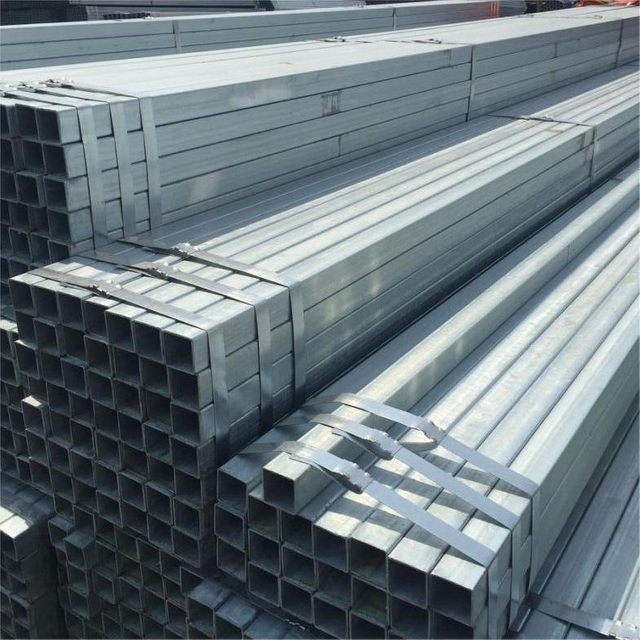
Another major advantage is its ease of processing. Square tubing can be easily cut, welded, drilled, and assembled using standard fabrication tools. Additionally, surface treatments such as galvanization or powder coating can be applied to enhance corrosion resistance, extending their service life in outdoor or humid environments. Overall, it is a versatile material ideal for applications requiring uniform performance in multiple directions.
What Is Rectangular Steel Tubing?
Rectangular steel tubing is a Hollow Structural Section (HSS) featuring two pairs of unequal sides. Typically made from carbon or alloy steel, its unique geometry provides distinct directional strength, making it highly effective for load-bearing and bending applications.
Unlike square tubing, rectangular tubing offers enhanced resistance to bending forces along its longer axis. This makes it ideal for beams, roof trusses, and support structures where loads are applied across longer spans. Engineers often choose it to maximize strength in one direction while minimizing material weight, improving overall structural efficiency.
Commonly used in construction, automotive manufacturing, and industrial platforms, rectangular tubing is easy to fabricate, weld, and assemble. Surface treatments like galvanization can also be applied to boost corrosion resistance. Overall, it is an essential, cost-effective choice for engineering projects requiring superior directional load support.
Strength Comparison: Square vs. Rectangular Steel Tubing
Performance Factor | Square Steel Tubing | Rectangular Steel Tubing |
Load Distribution | Evenly distributes loads in all directions. | Strong directional strength along the longer side. |
Bending Strength | Uniform strength for complex stresses. | Superior bending resistance along the major axis. |
Torsional Stability | Excellent resistance to twisting forces. | Less torsional resistance due to uneven geometry. |
Design Efficiency | Simplifies calculations for general structures. | Optimizes material usage to reduce weight and cost. |
Recommended Steel Tubing Products & Global Shipping
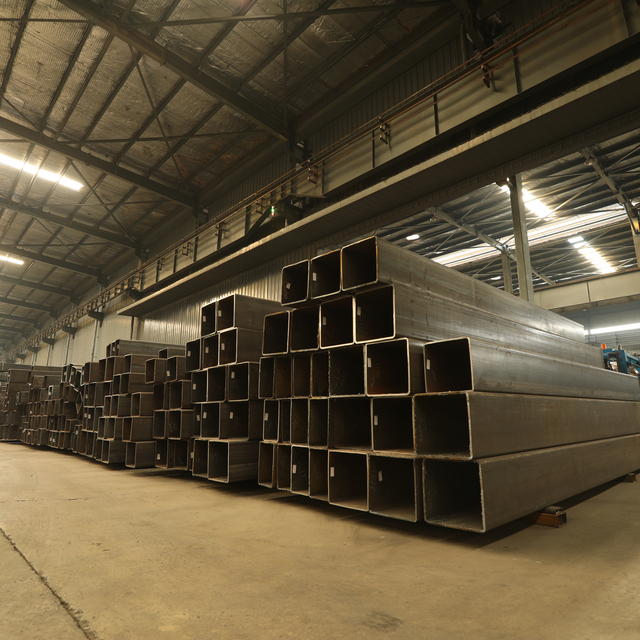
We provide a comprehensive range of high-quality square and rectangular steel tubing tailored for construction, industrial engineering, and manufacturing projects worldwide. Our product lineup includes standard square tubing for uniform load distribution, rectangular tubing for superior directional bending resistance, as well as galvanized and powder-coated options designed to withstand harsh outdoor environments.
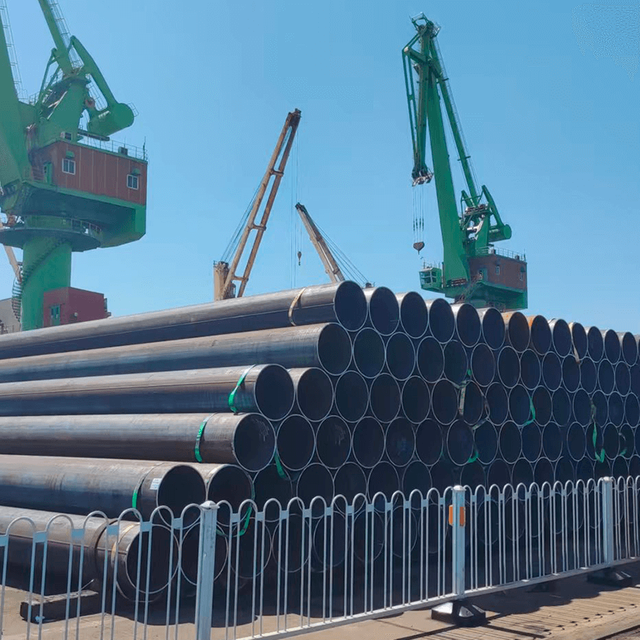
Every steel tube is manufactured from premium carbon steel and undergoes rigorous quality inspections, including strength and weld testing, to ensure full compliance with international standards. Beyond manufacturing, we offer efficient global shipping and export services. Our team ensures secure anti-corrosion packaging, safe container loading, and complete export documentation. With reliable logistics and stable production capabilities, we are committed to delivering high-quality steel tubing solutions to customers around the globe.
Advantages and Limitations of Square and Rectangular Tubing
Square and rectangular steel tubing are both essential structural materials, yet their distinct geometries create unique advantages and limitations. Understanding these differences is key to optimizing structural performance and cost-efficiency.
u Advantages and Limitations of Square Steel Tubing
Square steel tubing offers balanced strength in all directions due to its equal side lengths. This symmetrical geometry provides excellent torsional resistance, making it highly effective against twisting forces and ideal for support columns, frames, and fencing where multi-directional loads occur. Its uniform shape also simplifies engineering calculations. However, this balanced design is not always the most material-efficient option for unidirectional loads, potentially leading to higher material costs in large-scale projects compared to rectangular alternatives.
u Advantages and Limitations of Rectangular Steel Tubing
Rectangular steel tubing excels in directional strength. Its longer side delivers superior resistance to bending forces along the major axis, making it the preferred choice for beams, roof structures, and load-bearing spans. This directional efficiency allows engineers to optimize material usage and reduce overall structural weight. The primary limitation, however, is its uneven strength distribution; it offers lower torsional resistance and is less effective under multi-directional or irregular stress conditions compared to square tubing.
Conclusion: Choosing the Right Steel Tubing
Square and rectangular steel tubing are indispensable in modern construction, yet their distinct geometries dictate specific performance characteristics. Square tubing offers balanced strength and excellent torsional resistance in all directions, making it ideal for support columns and general frames. In contrast, rectangular tubing excels in directional bending resistance, providing superior efficiency for beams and load-bearing spans.
Neither type is universally superior; the choice depends entirely on load direction and structural requirements. While square tubing ensures multi-directional stability, rectangular tubing optimizes material usage for predictable loads. Often, combining both types maximizes overall structural balance. By understanding these unique strengths, engineers can make informed decisions to ensure safety, cost-efficiency, and long-term durability in any project.
FAQ:
(1) Which is stronger, square or rectangular steel tubing?
Explanation based on load type and direction
(2) When should I use rectangular steel tubing instead of square tubing?
Structural beams vs support columns
(3) Is square steel tubing better for welding and fabrication?
Workability and joint strength considerations
(4) Can square and rectangular tubing be used together in one structure?
Hybrid structural design applications