Tel: +86-0731-88672086 E-mail: info@great-pipe.com
- All
- Product Name
- Product Keyword
- Product Model
- Product Summary
- Product Description
- Multi Field Search

Views: 47 Author: Site Editor Publish Time: 2026-05-14 Origin: Site
Pipelines are vital to the global energy industry, yet gas and oil pipelines have vastly different engineering requirements due to their distinct physical properties.
Natural gas is highly compressible and transported under high pressure. Therefore, gas pipeline design prioritizes pressure resistance, advanced sealing, and sophisticated leak detection. In contrast, oil pipelines transport denser, often corrosive liquids, focusing on flow stability, internal corrosion prevention, and spill containment.
These differences dictate material and maintenance strategies. While both commonly use carbon steel (e.g., API 5L), gas systems emphasize high-strength pressure containment. Oil systems require specialized internal coatings and frequent "pigging" (cleaning) to prevent sediment buildup and ensure long-term operational safety.
What Is a Gas Pipeline?
A gas pipeline is a vital system for safely transporting natural gas, hydrogen, and other fuels from production sites to end-users. It is the most cost-effective and reliable method for moving large volumes of energy over long distances.
Gas pipelines are categorized into three types: gathering pipelines (collecting raw gas from wells), transmission pipelines (moving processed gas long-distance at high pressure), and distribution pipelines (delivering gas to homes and businesses).
Because gas is compressible, these systems operate under high pressure using compressor stations to maintain flow. They are built from high-strength carbon steel (e.g., API 5L) and equipped with advanced leak detection and automatic shut-off valves to prevent fire or explosion risks. Regular maintenance ensures the long-term safety and efficiency of this critical energy infrastructure.
What Is a Liquid (Oil) Pipeline?
A liquid (oil) pipeline is a vital transportation system designed to move crude oil, refined products (like gasoline and diesel), and industrial chemicals over long distances. It serves as a cornerstone of the global energy supply chain, offering a highly reliable and cost-effective way to connect oil fields, refineries, and distribution centers.
Unlike gas pipelines, oil pipelines transport incompressible fluids, relying on pump stations to maintain a stable flow. They are primarily categorized into crude oil pipelines (transporting unprocessed petroleum) and refined product pipelines (delivering processed fuels).
To combat internal corrosion from water and sulfur, these pipelines use high-strength carbon steel (e.g., API 5L) with internal protective linings. External durability is ensured through advanced 3PE/FBE coatings and cathodic protection. Regular maintenance, including "pigging" operations to clean sediment, ensures their massive transport capacity and long-term operational safety.
Key Differences Between Gas Pipelines and Oil Pipelines
While both gas and oil pipelines are critical components of the global energy infrastructure, their engineering requirements differ significantly due to the distinct physical properties of the substances they transport. Understanding these core differences is essential for engineers, contractors, and industrial buyers to select the most appropriate system for safety and efficiency.
Core Operational and Design Differences
The fundamental distinction lies in how the fluids behave. Natural gas is highly compressible, requiring pipelines to operate under extreme pressure to maintain flow. Conversely, crude oil and refined products are incompressible liquids, meaning the system prioritizes managing flow rates, viscosity, and sediment rather than extreme compression.
Feature | Gas Pipelines | Oil (Liquid) Pipelines |
Primary Mechanism | Uses compressor stations to boost gas pressure. | Uses pump stations to maintain liquid flow. |
Material Focus | Prioritizes high-pressure resistance and fracture toughness. | Prioritizes internal corrosion resistance against impurities. |
Safety Priority | Prevents leaks to avoid fire and explosion hazards. | Prevents spills to avoid environmental and soil contamination. |
Maintenance | Focuses on pressure testing and compressor monitoring. | Requires frequent "pigging" and cleaning to remove sediment. |
Material Selection and Safety Protocols
Because gas pipelines operate under high pressure, they often require specialized carbon steel with excellent fracture toughness to prevent catastrophic failures. In contrast, oil pipelines face internal threats from water, sulfur, and chemical impurities found in crude oil. Therefore, oil pipelines frequently incorporate internal linings, epoxy coatings, or alloy materials to combat corrosion and extend service life.
Safety systems are also tailored to the specific risks of the medium. Gas transmission networks are equipped with advanced leak detection sensors and automatic shut-off valves to mitigate the rapid spread of flammable gas. Oil pipeline projects, however, focus heavily on spill containment systems and environmental protection measures to prevent soil and water pollution in the event of a rupture.
Operational and Maintenance Considerations
From a cost perspective, gas pipelines often incur higher initial construction expenses due to the need for pressure-resistant materials and expensive compressor stations. Oil pipelines, while sometimes less capital-intensive upfront, can face higher long-term operational costs driven by the need for rigorous corrosion control, frequent internal cleaning (pigging), and sediment management. Ultimately, gas pipelines are engineered for pressure management, while oil pipelines are optimized for flow efficiency and corrosion protection.
Common Materials Used in Modern Pipeline Manufacturing
Common Materials Used in Modern Pipeline Manufacturing
Material selection is a cornerstone of modern pipeline engineering. The safety, performance, and longevity of a pipeline system depend heavily on its ability to withstand high pressure, harsh weather, and corrosive environments. To meet diverse industrial demands, manufacturers rely on a combination of high-performance metals and advanced protective systems.
Primary Pipeline Materials and Applications
Different pipeline materials offer distinct advantages depending on the operating conditions. Below is a breakdown of the most common materials used in the oil and gas industry:
Material Type | Key Characteristics | Typical Applications |
Carbon Steel | High mechanical strength, excellent weldability, and cost-efficient. | Large-scale oil and gas transmission (API 5L grades like X52, X65, X70). |
Stainless Steel | Superior resistance to rust, chemicals, and extreme temperatures. | Offshore drilling, chemical transport, and high-moisture environments (Grades 304, 316). |
Alloy Steel | Enhanced strength and heat resistance through added elements like chromium and nickel. | High-temperature refineries, sour gas transportation, and specialized drilling systems. |
Protective Coatings | Shields pipes from soil corrosion, moisture, and internal chemical damage. | External 3PE/FBE coatings and internal linings to improve flow efficiency and durability. |
Seamless vs. Welded Steel Pipes
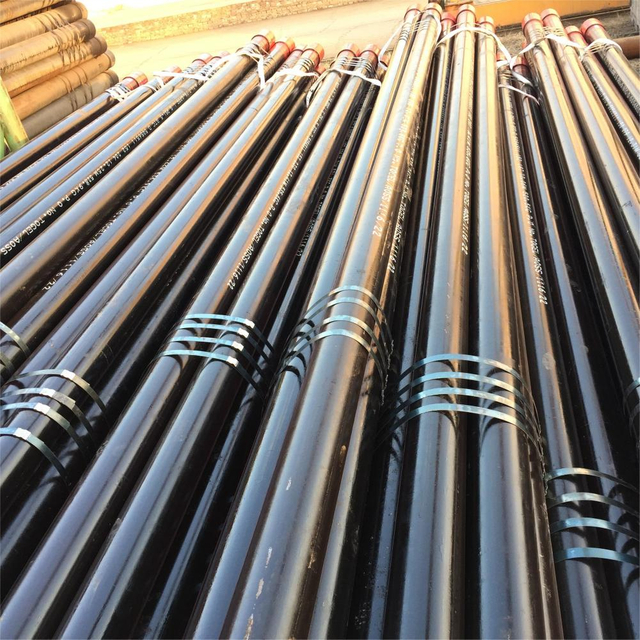
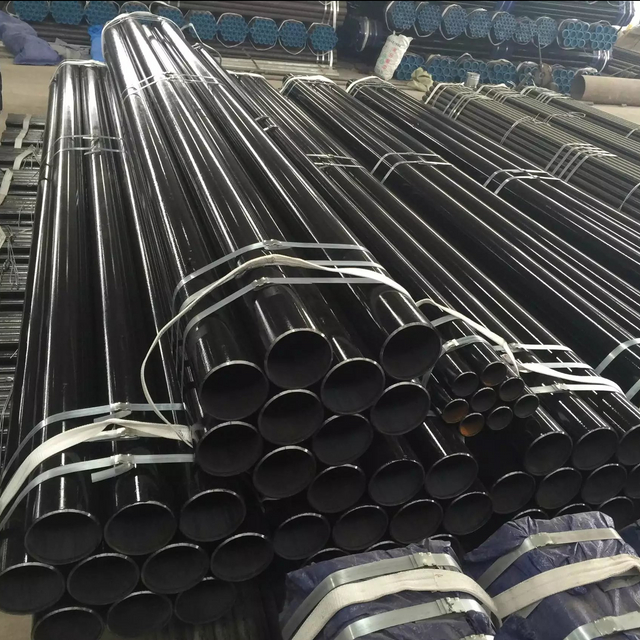
Beyond the base metal, the manufacturing process plays a crucial role in pipeline performance. Seamless steel pipes are often preferred for high-pressure applications because their uniform structure offers exceptional pressure resistance without a weld seam. On the other hand, welded steel pipes (such as ERW, LSAW, and SSAW) are widely used in large-diameter transmission projects. They provide excellent structural performance at a lower production cost, making them ideal for extensive infrastructure networks.
The Role of Protective Coatings
Even the strongest steel requires protection to maximize its service life. External coatings like 3PE (three-layer polyethylene) and FBE (fusion-bonded epoxy) create a robust barrier against soil corrosion and environmental damage. Internally, specialized linings are applied to reduce friction, improve flow efficiency, and prevent corrosion from chemical impurities in the transported fluids.
Recommended Pipeline Products and Global Shipping Services
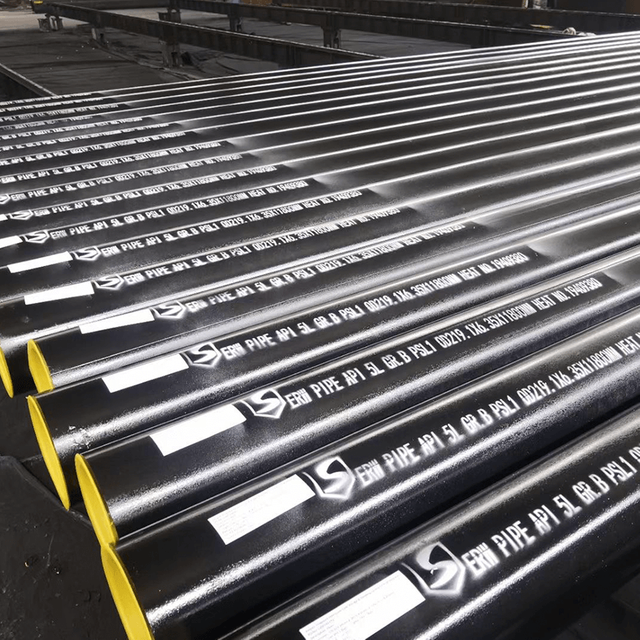
We supply high-quality steel pipeline products essential for safe and efficient oil, gas, and industrial fluid transportation. Our core offerings include API 5L steel pipes (Grades B, X42, X52, X65, X70) in both seamless and welded options.
Key Products & Solutions:
(1) Gas Systems: We recommend ERW steel pipes for their precise dimensions and reliability in high-pressure natural gas networks.
(2) Oil Transmission: Our LSAW and SSAW pipes are ideal for large-diameter, long-distance crude oil projects and offshore engineering.
(3) Anti-Corrosion: To ensure durability, we offer advanced protective systems including 3PE coating, FBE coating, epoxy lining, and galvanized treatments.
(4) Fittings: A complete range of flanges, elbows, and tees manufactured to API, ASTM, and ASME standards.
Global Shipping & Services:
We provide flexible OEM/ODM customization and fast global export services. Our logistics team ensures safe delivery via container or bulk cargo with customized waterproof packaging. Third-party inspections and material test certificates are available to guarantee quality. Committed to competitive pricing and professional support, we deliver durable pipeline solutions for energy and industrial projects worldwide.
Future Trends in Pipeline Engineering
Pipeline engineering is rapidly evolving to meet the global demand for safer, more efficient, and environmentally responsible energy transportation. Several key trends are shaping the future of steel pipe manufacturing and oil and gas infrastructure.
Smart Monitoring & Automation
Modern pipelines are shifting from manual inspections to digital, real-time monitoring. The integration of IoT sensors, automated controls, and AI-based data analysis allows operators to continuously track pressure, temperature, and structural health. Advanced leak detection and predictive maintenance systems significantly improve operational safety while reducing long-term costs.
High-Strength Materials
To support larger, long-distance projects, the industry is adopting high-grade pipeline steels like API 5L X70 and X80. These high-strength materials allow for reduced wall thickness without compromising pressure resistance, which lowers pipeline weight, welding workloads, and overall construction costs.
Advanced Corrosion Protection
Future systems will feature highly durable anti-corrosion technologies. Innovations in 3PE, FBE, and epoxy coating systems, alongside improved cathodic protection, are extending pipeline service life and resisting harsh environmental damage.
Sustainability & New Energy
Environmental sustainability is a top priority. Manufacturers are exploring low-carbon steel production and eco-friendly coatings. Additionally, as the clean energy sector expands, specialized pipelines designed for hydrogen transportation are becoming a critical area of development.
FAQ:
(1)What material is commonly used for gas pipelines?
Carbon steel pipes such as API 5L Grade B and X65 are commonly used for gas pipelines because of their high strength, pressure resistance, and cost efficiency. Anti-corrosion coatings are often added for long-distance transmission projects.
(2)Why do oil pipelines require different maintenance than gas pipelines?
Oil pipelines transport heavier fluids that can cause sediment buildup, internal corrosion, and contamination. As a result, they require more frequent cleaning, pigging operations, and corrosion monitoring compared to gas pipelines.
(3)Which is safer: gas pipelines or oil pipelines
Both systems are designed with strict safety standards, but the risks differ. Gas pipelines face explosion and leakage hazards, while oil pipelines mainly face environmental contamination risks from spills.
(4) What is the difference between API 5L and stainless steel pipelines?
API 5L carbon steel pipes are widely used for standard oil and gas transmission because of their strength and affordability. Stainless steel pipelines are preferred for corrosive environments, chemical transport, and offshore applications where higher corrosion resistance is required.