Tel: +86-0731-88672086 E-mail: info@great-pipe.com
- All
- Product Name
- Product Keyword
- Product Model
- Product Summary
- Product Description
- Multi Field Search

Views: 2 Author: Site Editor Publish Time: 2026-06-22 Origin: Site
Straight seam steel pipes are essential for oil, gas, and structural projects, but their long-term performance relies heavily on proper surface treatment. Rust and impurities can compromise anti-corrosion coatings, leading to premature pipeline failure. Effective rust removal is therefore critical to ensure strong adhesion for FBE, 3LPE, or galvanized coatings.
Beyond surface preparation, the overall manufacturing process—including forming, welding, and non-destructive testing—must be strictly controlled to meet international quality standards. This article explores common rust removal methods and the complete production workflow of straight seam steel pipes.
What Is a Straight Seam Steel Pipe?
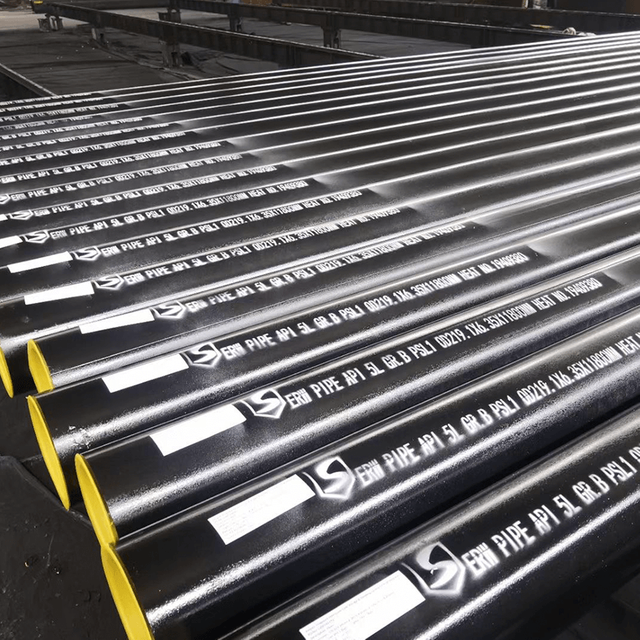
A straight seam steel pipe is a welded pipe formed by rolling a steel plate or coil into a cylinder and joining the edges with a longitudinal weld parallel to its length. It is primarily categorized into Electric Resistance Welded (ERW) pipes for small to medium diameters and Longitudinal Submerged Arc Welded (LSAW) pipes for large-diameter, high-pressure applications.
Compared to spiral-welded pipes, straight seam pipes feature a shorter weld length, offering high dimensional accuracy, stable mechanical properties, and simplified quality control. They are manufactured according to major international standards such as API 5L, ASTM A53, and EN 10219, ensuring strict compliance with chemical and mechanical requirements.
These pipes are highly versatile and widely used across various sectors. Key applications include oil and gas transmission, water supply and drainage infrastructure, and structural construction like bridge components and foundation piles. They are also extensively utilized in power plants and industrial facilities.
Driven by efficient modern production technologies, straight seam steel pipes offer excellent cost-effectiveness without compromising quality. When combined with advanced welding, non-destructive testing, and anti-corrosion coatings, they deliver dependable performance and a long service life, making them an indispensable product in global energy and infrastructure markets.
Rust Removal Methods for Straight Seam Steel Pipes
Effective rust removal is critical for straight seam steel pipes to ensure strong coating adhesion and long-term corrosion resistance. Without proper surface preparation, impurities like rust, mill scale, and oil can compromise the protective coating and shorten the pipe's service life.
Several rust removal methods are employed in the industry. Manual and power tool cleaning are typically used for localized repairs or minor maintenance, but lack the efficiency required for large-scale production. Chemical pickling uses acid solutions to dissolve oxidation, though it requires careful rinsing to prevent environmental and further corrosion issues.
The most widely adopted and preferred method in modern manufacturing is abrasive blasting (shot or sandblasting). By propelling high-speed abrasive particles, this technique thoroughly removes contaminants while creating a uniform surface profile and anchor pattern. This significantly enhances the mechanical bonding of anti-corrosion coatings like FBE and 3LPE, easily achieving the stringent Sa 2.5 or Sa 3 cleanliness standards.
Following rust removal, rigorous quality inspections—including cleanliness checks and surface roughness measurements—are essential to verify that the pipe meets project specifications. Ultimately, selecting the right method depends on production volume and coating requirements, with abrasive blasting remaining the industry standard for its unmatched efficiency and consistent preparation quality.
Straight Seam Steel Pipe Production Process
Production Stage | Key Operations & Equipment | Quality Control & Purpose |
Raw Material Inspection | Selection of steel coils/plates based on specifications. | Verifies chemical composition, mechanical properties, and surface condition. |
Plate Preparation | Leveling, cutting, trimming, and edge milling. | Ensures accurate dimensions and proper groove geometry for welding. |
Pipe Forming | Roll-forming (ERW) or JCOE/UOE pressing (LSAW). | Shapes steel into a precise cylinder with accurate diameter and wall thickness. |
Welding | High-frequency resistance welding (ERW) or submerged arc welding (LSAW). | Joins edges with strict parameter control to ensure strong weld integrity. |
Non-Destructive Testing (NDT) | Ultrasonic, radiographic, eddy current, and magnetic particle testing. | Detects internal/external defects without damaging the pipe. |
Hydrostatic Testing | Pressurized water testing. | Verifies pressure resistance and leak-tightness of the pipe. |
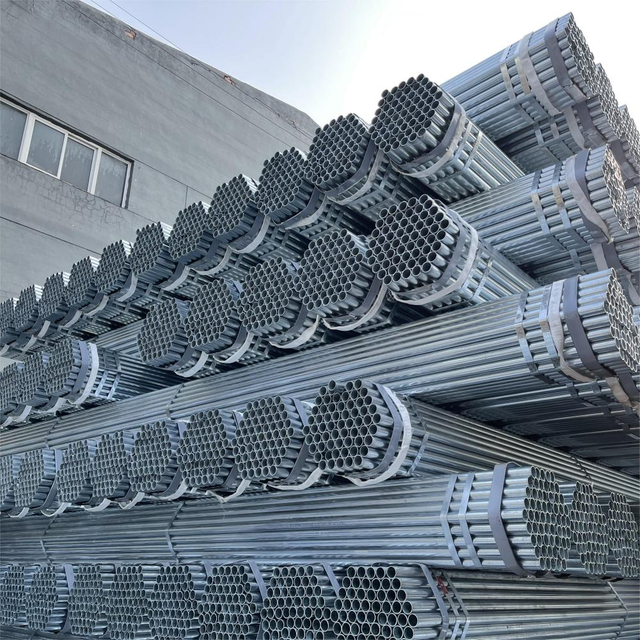
Surface Treatment | Shot blasting, FBE/3LPE coating, epoxy, or galvanizing. | Removes rust/mill scale and applies protective layers for corrosion resistance. |
Final Inspection & Shipment | Dimension checks, appearance inspection, marking, and packaging. | Ensures compliance with standards before domestic delivery or export. |
Our Recommended Straight Seam Steel Pipe Products and Global Shipping Services
We are your trusted supplier of high-quality straight seam steel pipes, serving infrastructure and energy projects worldwide. We offer a comprehensive product range, including API 5L LSAW, ASTM A252 piling pipes, EN 10219 structural pipes, and ERW pipes, as well as custom FBE and 3LPE anti-corrosion coatings.
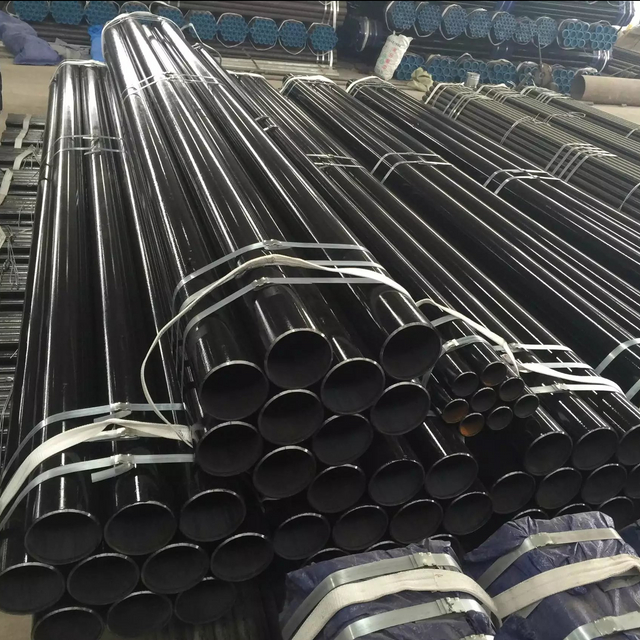
Each pipe undergoes rigorous quality control, including ultrasonic and hydrostatic testing, to ensure strict compliance with international standards. For safe transport, we provide secure, waterproof packaging and protective wrapping.
In addition to manufacturing, we offer reliable global shipping solutions, including Full Container Load (FCL), Less than Container Load (LCL), and bulk cargo shipping. Our professional export team handles all necessary documentation, such as factory inspection certificates and certificates of origin, streamlining your logistics process. From premium steel pipes to secure international transport, we provide reliable products and comprehensive services to help you complete your projects efficiently and successfully.
Common Mistakes in Rust Removal and Pipe Production
Common Mistake | Root Causes & Description | Potential Consequences & Solutions |
Inadequate Surface Cleaning | Failure to completely remove rust, mill scale, oil, or dust before coating. | Weakens coating adhesion and creates moisture pathways, leading to accelerated corrosion. |
Substandard Cleanliness Levels | Improper blasting equipment or poor process control failing to meet standards like Sa 2.5. | Reduces the effectiveness of FBE, 3LPE, or epoxy coatings due to an uneven surface profile. |
Improper Post-Cleaning Storage | Exposure to humidity, rain, or condensation after rust removal but before coating. | Causes flash rust formation. Requires controlled storage and timely coating application. |
Poor Welding Control | Incorrect parameters, inadequate edge prep, or insufficient operator experience. | Creates structural defects (porosity, cracks, incomplete penetration), risking operational failure. |
Neglecting Inspection & Testing | Reducing testing frequency to save time or costs. | Increases the risk of delivering defective products; strict NDT and hydrostatic tests are mandatory. |
Wrong Coating Selection | Choosing a basic coating for highly corrosive soil or offshore environments. | Results in premature corrosion. Coating must match specific project specs and environmental conditions. |
Conclusion
Straight seam steel pipes are essential for global infrastructure and energy projects, but their long-term reliability depends on rigorous manufacturing and surface treatment. Proper rust removal is the most critical step; eliminating rust, mill scale, and oil through abrasive blasting ensures strong adhesion for anti-corrosion coatings like FBE and 3LPE, preventing premature pipeline failure.
The complete production process demands strict quality control at every stage. From raw material inspection and precise welding to non-destructive and hydrostatic testing, each step guarantees compliance with international standards. Avoiding common mistakes—such as inadequate cleaning, poor welding practices, improper storage, or incorrect coating selection—is vital to minimizing corrosion and leakage risks.
For buyers and contractors, partnering with an experienced supplier is the most effective way to ensure consistent quality. A reliable manufacturer provides certified materials, advanced testing, customized coating solutions, and professional logistics support, significantly reducing project risks. Ultimately, combining effective rust removal, advanced manufacturing, and strict quality assurance is the key to producing high-performance straight seam steel pipes. Focusing on these elements maximizes pipeline durability, extends service life, and delivers superior long-term value for demanding industrial applications.
FAQ:
(1) What is the most effective rust removal method for straight seam steel pipes?
Abrasive shot blasting is generally considered the most effective method because it removes rust, mill scale, and contaminants while creating the surface profile required for strong coating adhesion.
(2) Why is Sa 2.5 surface preparation important?
Sa 2.5 cleanliness ensures that nearly all rust, scale, and contaminants are removed, significantly improving coating performance and long-term corrosion resistance.
(3) What coatings are commonly applied after rust removal?
Common coating systems include FBE coating, 3LPE coating, epoxy coating, coal tar epoxy coating, and hot-dip galvanizing, depending on project requirements.
(4) How is the weld quality of straight seam steel pipes tested?
Manufacturers typically perform ultrasonic testing, radiographic inspection, hydrostatic testing, and dimensional inspections to ensure weld integrity and compliance with standards.