Tel: +86-0731-88672086 E-mail: info@great-pipe.com
- All
- Product Name
- Product Keyword
- Product Model
- Product Summary
- Product Description
- Multi Field Search

Views: 2 Author: Site Editor Publish Time: 2026-06-17 Origin: Site
Seamless connections are essential in modern industrial piping systems, offering superior safety and reliability for transporting oil, gas, and chemicals under extreme conditions. Manufactured without welded seams, seamless pipes provide a uniform structure that enhances pressure resistance, minimizes structural weaknesses, and reduces the risk of corrosion-related failures.
This continuous internal structure also improves flow efficiency by reducing turbulence and pressure loss. While seamless steel pipe may involve higher initial costs, its exceptional durability, reduced maintenance needs, and extended service life deliver significant long-term value and lower lifecycle costs.
Widely adopted in the oil and gas, petrochemical, power generation, and offshore engineering sectors, seamless connections are the preferred choice for critical applications where system failure is not an option. By ensuring consistent mechanical properties and operational stability, seamless piping systems provide a highly reliable solution for demanding industrial environments, ultimately optimizing overall system performance and safety.
What Are Seamless Connections in Piping?
Seamless connections in piping refer to systems utilizing seamless pipes and fittings to create a continuous flow path without the structural limitations of welded seams. Manufactured from solid steel billets, seamless pipes feature a uniform wall structure that significantly reduces the risk of seam-related defects.
A complete seamless system comprises seamless pipes, elbows, tees, reducers, and flanges. Using these compatible components ensures consistent strength and reliability, which is critical in high-pressure, high-temperature, and corrosive environments.
These systems are available in various materials tailored to specific industrial needs. Carbon steel seamless pipes are widely used in oil, gas, and power generation for their strength and cost-effectiveness. Stainless steel seamless pipes offer excellent corrosion resistance for chemical and pharmaceutical processing. For extreme conditions, alloy steel, duplex stainless steel, and nickel alloys provide superior mechanical performance and durability.
Ultimately, seamless connections create a stronger, more reliable piping infrastructure. Their uniform structure, exceptional pressure resistance, and long-term durability make them the preferred choice for critical applications where safety and performance are top priorities.
Key Advantages of Seamless Connections
Key Advantage | Core Benefits & Performance Impact |
Higher Pressure Resistance | Features a uniform wall thickness without longitudinal welds, effectively eliminating stress concentration points for reliable performance in high-pressure systems. |
Improved Structural Integrity | Distributes mechanical loads, vibrations, and temperature fluctuations evenly, providing superior resistance to cracking, deformation, and fatigue. |
Enhanced Corrosion Resistance | Maintains consistent metallurgical properties throughout the entire pipe, eliminating vulnerable weld zones and significantly reducing localized corrosion risks. |
Better Flow Efficiency | Offers a smooth, continuous internal surface that minimizes fluid turbulence and pressure loss, thereby improving system efficiency and reducing energy consumption. |
Increased Safety & Reliability | Eliminates seam-related defects and weak points, drastically reducing the risk of leaks and ensuring dependable, long-term operational safety in critical environments. |
Typical Applications of Seamless Connections
Industry / Application | Key Use Cases & Performance Benefits |
Oil and Gas | Utilized in drilling, transmission, and offshore platforms to safely handle high-pressure fluids, minimizing leak risks and reducing maintenance costs. |
Power Generation | Essential for boilers, superheaters, and steam distribution systems, providing excellent resistance to extreme temperatures and thermal stress. |
Petrochemical Processing | Safely transports aggressive and corrosive media through complex networks, ensuring material integrity and preventing localized corrosion. |
Construction & Mechanical | Provides durable, high-strength solutions for industrial utility services, HVAC systems, compressed air, and structural fluid transportation. |
Offshore & Marine | Withstands harsh seawater and extreme weather conditions in subsea and marine applications, ensuring reliable performance in remote, hard-to-repair locations. |
How to Select the Right Seamless Piping Products
Selecting the right seamless piping products is essential for ensuring system safety, operational efficiency, and long-term reliability. Buyers should evaluate several key factors before making a purchasing decision.
First, assess the operating pressure and temperature. High-temperature and high-pressure environments typically require alloy steel, while carbon steel is suitable for medium-pressure applications. Second, choose the appropriate material grade. Carbon steel offers cost-effectiveness for general use, stainless steel (e.g., ASTM A312) provides necessary corrosion resistance for chemical and food processing, and alloy steel is ideal for extreme conditions.
Third, verify that the pipes comply with recognized international standards, such as ASTM A106, API 5L, or ASTM A335, to ensure they meet required performance specifications. Fourth, evaluate quality assurance by requesting Mill Test Certificates (MTC) and confirming that products have undergone rigorous testing, including hydrostatic and non-destructive testing.
Finally, consider the long-term value rather than just the initial cost. Investing in high-quality seamless pipes from reputable suppliers reduces maintenance expenses, minimizes downtime, and enhances overall safety. By carefully matching seamless piping products to specific project requirements, companies can achieve superior system performance and reliable, long-term operational success.
Our Recommended Seamless Pipe Products and Global Shipping Services
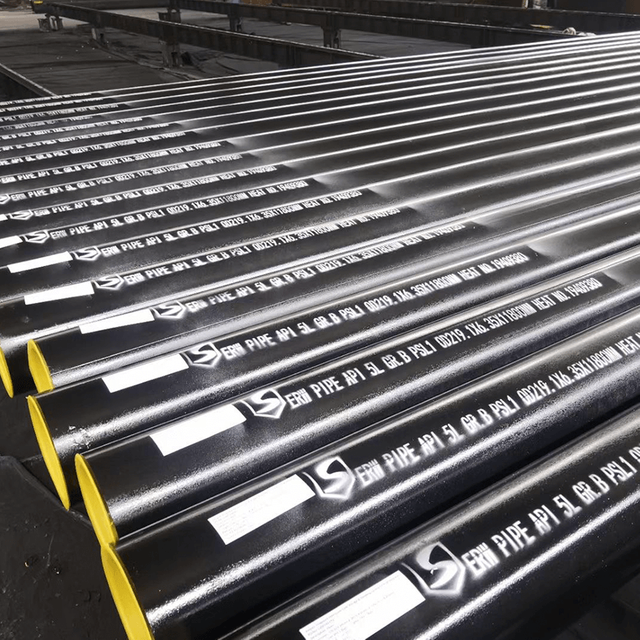
We supply a comprehensive range of high-quality seamless pipes, including ASTM A106 carbon steel, ASTM A312 stainless steel, API 5L line pipes, and ASTM A335 alloy steel, alongside custom fittings. All products meet strict international standards and undergo rigorous inspections, including hydrostatic and non-destructive testing, with full MTC traceability and optional third-party verification.
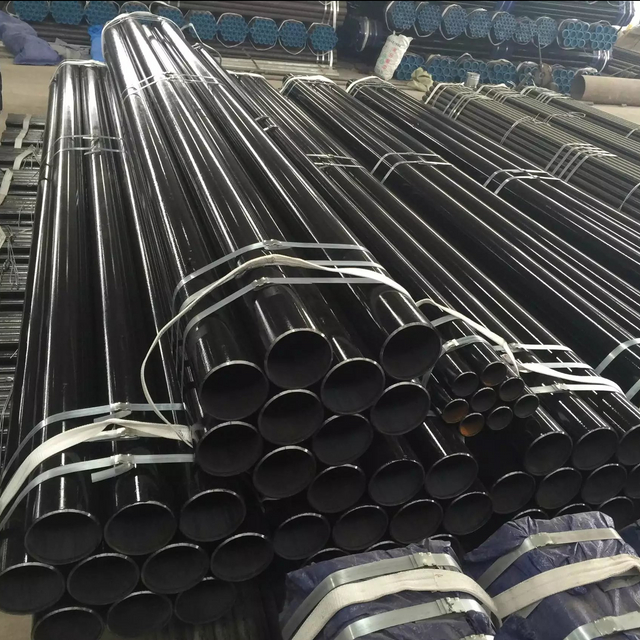
To ensure safe transit, pipes are securely bundled with protective caps, anti-rust coatings, and reinforced export packaging. We provide flexible global logistics, including FCL, LCL, and bulk shipping, as well as port-to-port and door-to-port delivery. Our team also handles complete export documentation and customs clearance. Combining premium products with secure packaging and efficient global shipping, we deliver reliable, cost-effective, seamless piping solutions for industrial projects worldwide.
Common Mistakes When Choosing Piping Connections
Selecting the right piping connection is critical for industrial system safety and reliability, yet many projects suffer from common selection mistakes.
First, buyers often focus solely on initial costs rather than total lifecycle expenses. Cheaper alternatives may lead to frequent repairs and shorter service life. Second, ignoring operating pressure and temperature can cause severe safety risks. High-stress environments require specialized materials like seamless or alloy pipes to prevent premature failure. Third, overlooking corrosion requirements is a major error; matching materials to specific environmental conditions is essential for long-term durability.
Additionally, failing to verify industry standards (such as ASTM or API) and neglecting pre-installation inspections (like hydrostatic or ultrasonic testing) can result in undetected defects. Finally, choosing the wrong connection type can compromise structural integrity. For critical high-pressure systems, seamless connections are often preferred to eliminate weld-related weak points.
By carefully evaluating operating conditions, material compatibility, standards, and quality assurance, engineers can avoid these costly pitfalls. Prioritizing long-term performance over short-term savings ensures safer, more efficient, and reliable piping systems.
Conclusion
Seamless connections are vital to modern industrial piping, offering superior strength, uniform structure, and reliable performance under extreme conditions. By eliminating welded seams, they minimize leakage risks and enhance structural integrity, making them ideal for high-pressure and corrosive environments.
These systems deliver exceptional long-term durability, reducing maintenance needs and lowering overall lifecycle costs despite higher initial investments. Widely used across oil and gas, petrochemical, power generation, and construction industries, seamless pipes are available in various materials to match specific operational demands.
To maximize these benefits, engineers must carefully evaluate operating conditions, material compatibility, and industry standards. Sourcing from reliable manufacturers and ensuring rigorous quality control, testing, and secure packaging are essential for successful project execution. Ultimately, seamless connections provide a safe, durable, and cost-effective solution, ensuring long-lasting performance and operational safety for critical industrial infrastructure.
FAQ:
(1) Why are seamless pipes stronger than welded pipes?
Seamless pipes have no welded seam, resulting in more uniform strength and pressure resistance.
(2) Are seamless pipes always necessary?
Not always. They are generally preferred for high-pressure, high-temperature, and critical service applications.
(3) Which industries use seamless piping most frequently?
Oil and gas, power generation, petrochemical processing, offshore engineering, and heavy industrial manufacturing.
(4) Do seamless pipes cost more than welded pipes?
Yes, seamless pipes typically have higher manufacturing costs, but they often provide better reliability and longer service life.