Tel: +86-0731-88672086 E-mail: info@great-pipe.com
- All
- Product Name
- Product Keyword
- Product Model
- Product Summary
- Product Description
- Multi Field Search

Views: 11 Author: Site Editor Publish Time: 2026-06-25 Origin: Site
Galvanized steel pipes and ordinary (black) steel pipes differ fundamentally in surface treatment and corrosion resistance. Ordinary steel pipes are uncoated and highly vulnerable to atmospheric corrosion, making them suitable primarily for dry indoor environments. Conversely, galvanized steel pipes feature a protective zinc coating applied via hot-dip galvanizing. This zinc acts as a sacrificial barrier, corroding first to protect the underlying steel and extending the pipe's service life to up to 30 years in harsh or outdoor conditions.
The choice between the two depends heavily on the application environment. A general industry rule is to use galvanized pipes for water supply and ordinary steel pipes for gas. Galvanized pipes are not recommended for gas lines, as zinc flaking can cause blockages and hazards. Similarly, ordinary steel pipes should never be used for water supply, as they will rapidly rust and degrade. In marine environments, plain carbon steel may last only about 3 years, whereas a galvanized pipe with a thick zinc coating can extend the lifespan to approximately 11 years.
While ordinary steel pipes offer lower initial costs for non-corrosive applications, galvanized pipes provide superior long-term value and durability in moist or outdoor settings. Selecting the appropriate material based on environmental exposure ensures structural integrity, safety, and optimal lifecycle costs for any construction or infrastructure project.
Key Differences—Corrosion Resistance, Service Life, and Appearance
The fundamental difference between galvanized and ordinary steel pipes lies in their corrosion resistance and service life. Galvanized pipes feature a zinc coating that acts as a sacrificial barrier, corroding first to protect the underlying steel through cathodic protection. This makes them highly resistant to rust in humid or marine environments. In contrast, ordinary steel pipes lack this protective layer and are highly vulnerable to external corrosion. Quantitative data highlights this disparity: in marine seawater, plain-carbon steel corrodes at about 1 mm per year, lasting only 3 years. Conversely, galvanized steel with a 200–300 μm zinc coating extends the service life to approximately 11 years, offering 3.5 times the lifespan despite a 1.5 times higher initial cost.
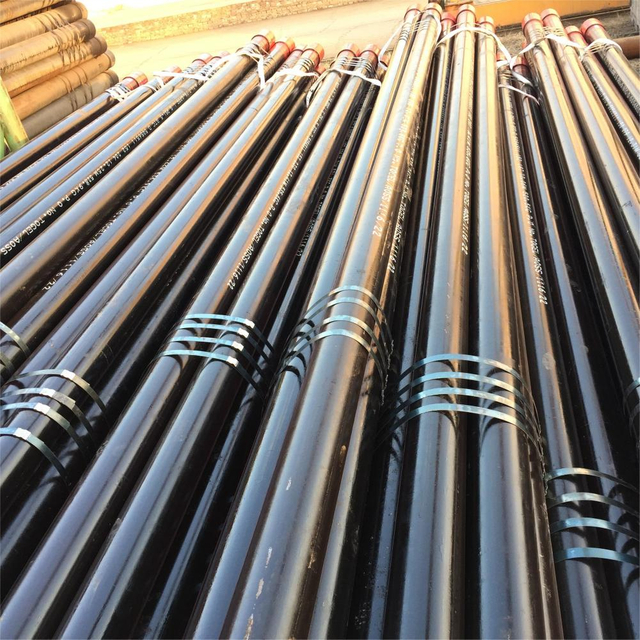
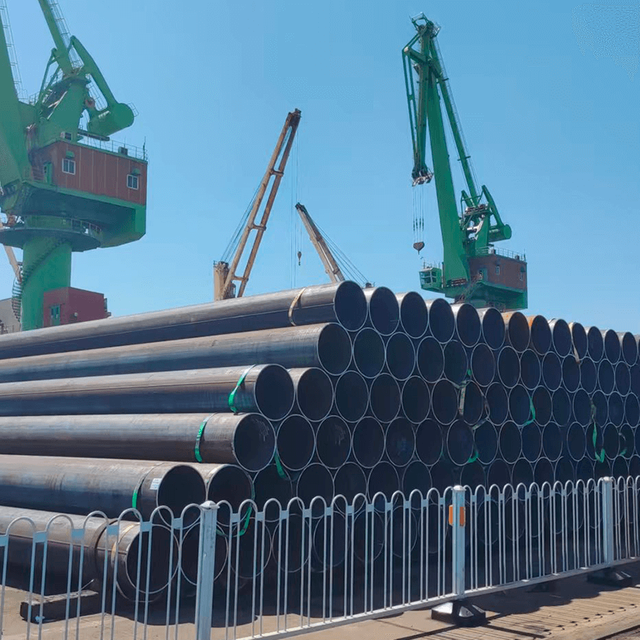
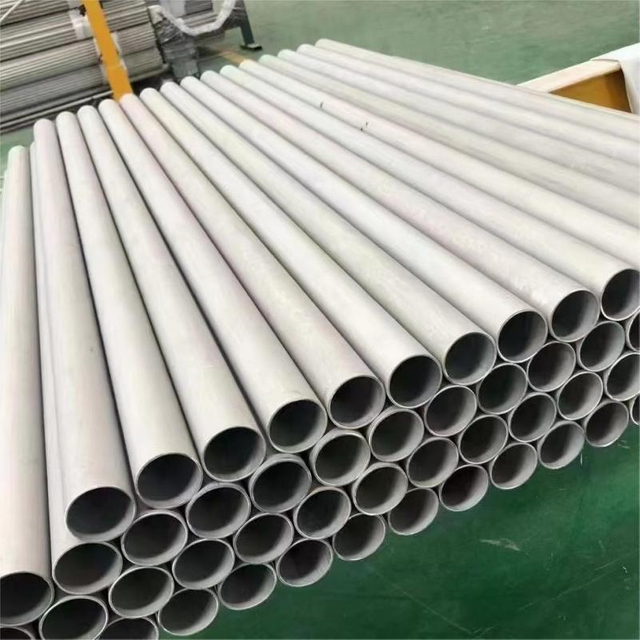
Service life and appearance further distinguish the two materials. Hot-dip galvanized pipes can provide rust-free protection for up to 30 years, whereas ordinary steel pipes can begin rusting in less than a month in humid conditions. Visually, galvanized pipes offer a clean, silver-gray finish that requires no painting, making them ideal for exposed architectural features. Ordinary steel pipes have a flat black or dark gray surface from iron oxide scale, serving as a functional base that typically requires painting or hiding. Ultimately, while ordinary pipes are adequate for dry indoor use, galvanized pipes are essential for any moisture-exposed application.
Key Differences: Galvanized vs. Ordinary Steel Pipes
Factor | Ordinary Steel Pipe | Galvanized Steel Pipe |
Corrosion Resistance | Low; highly vulnerable to rust and moisture. | High; zinc acts as a sacrificial barrier. |
Service Life | ~3 years in marine/seawater environments. | ~11 years in seawater; up to 30 years in general use. |
Appearance | Flat black or dark gray; requires painting. | Silver-gray, uniform finish; no painting needed. |
Maintenance | High; requires regular painting or coating. | Minimal; self-protecting against atmospheric corrosion. |
Best Application | Dry indoor environments, hidden structures. | Exposed outdoor, water supply, and marine environments. |
Manufacturing Processes and Type
GI steel pipes are primarily manufactured using two distinct methods: Hot-Dip Galvanizing (HDG) and Electro-Galvanizing (EG). HDG is the industry standard for demanding applications, involving the immersion of steel pipes in a molten zinc bath at approximately 450°C. This high-temperature process creates a metallurgical bond with multiple iron-zinc intermetallic layers, resulting in a thick coating (45–200 microns) that provides 25 to 75+ years of corrosion resistance in harsh environments. Conversely, EG uses an electrical current in a zinc electrolyte bath at ambient temperature to electrochemically deposit a thin, bright, and smooth coating (5–25 microns). While EG offers a superior aesthetic finish and lower cost, its service life is limited to 2–10 years in mild environments, making it unsuitable for buried or submerged piping.
Quality control and manufacturing standards are strictly regulated. Key standards include ASTM A53 for water service and GB/T 3091 for low-pressure fluid transportation. Quality requirements mandate that the galvanized layer withstand five consecutive copper sulfate immersions without copper plating and endure a 90° cold bending test without cracking. The complete HDG manufacturing sequence involves base pipe production, rigorous surface preparation (degreasing, pickling, fluxing), molten zinc immersion, cooling, passivation, and final inspection. Post-galvanizing, threading, and packaging are completed to ensure the product is ready for shipment.
Hot-Dip vs. Electro-Galvanizing: Direct Comparison
Parameter | Hot-Dip Galvanizing (HDG) | Electro-Galvanizing (EG) |
Process | Immersion in molten zinc at 450°C | Electrochemical deposition in a zinc salt bath |
Coating Thickness | 45–200 microns | 5–25 microns |
Appearance | Matte gray, spangled | Bright, smooth, uniform |
Corrosion Protection | 25–75+ years | 2–10 years |
Bond Type | Metallurgical (Fe-Zn alloy layers) | Mechanical adhesion |
Cost | Moderate | Lower |
Suitable For | Pipes, beams, and large structural components | Fasteners, sheet metal, small parts |
Application Differences
Selecting the appropriate steel pipe depends primarily on the operating environment. The fundamental industry rule is: use ordinary steel pipes for gas, and galvanized steel pipes for water. Ordinary steel pipes feature a smooth interior and lack a zinc coating, making them the standard, economical choice for natural gas and propane transmission, as they prevent zinc flaking that could clog burner orifices. They are also preferred for concealed fire sprinkler systems and indoor electrical conduits in dry environments.
Conversely, galvanized steel pipes are specified wherever moisture or corrosion is a concern. The zinc coating prevents rust and water contamination, making it essential for water supply systems. They are also the standard for outdoor applications like fencing, handrails, and scaffolding, as well as marine environments. In marine settings, hot-dip galvanized pipes with a 200–300 μm zinc coating provide significantly extended service life. While galvanized pipes are more expensive, their use in moisture-exposed applications is justified by reduced maintenance and long-term durability. Over-specifying galvanized pipe for dry, indoor applications adds unnecessary costs, whereas using ordinary pipes in wet environments leads to premature failure.
Application Differences: Ordinary vs. Galvanized Steel Pipes
Application | Recommended Pipe Type | Key Reason |
Natural gas/propane transmission | Ordinary steel pipe | Smooth interior; prevents zinc flaking that clogs valves. |
Fire sprinkler systems | Ordinary steel pipe | Zinc flakes can clog sprinkler heads; more fire-resistant. |
Water supply systems | Galvanized steel pipe | Zinc coating prevents rust and potable water contamination. |
Outdoor fencing & railings | Galvanized steel pipe | Corrosion resistance; silver-gray finish requires no painting. |
Marine environments | Galvanized steel pipe (HDG) | Extended service life and protection against seawater corrosion. |
Construction scaffolding | Galvanized steel pipe | Weather resistance allows for safe reuse across multiple job sites. |
Electrical conduit (indoor) | Ordinary steel pipe | Adequate protection for wiring in dry environments. |
Electrical conduit (wet) | Galvanized steel pipe | Corrosion resistance prevents structural degradation. |
Exposed handrails | Galvanized steel pipe | Aesthetic finish combined with long-term corrosion resistance. |
Product Recommendations and Shipping Information
Category | Details & Specifications |
Product Recommendations (Moisture/Marine) | HDG Welded/Seamless (ASTM A53, GB/T 3091): Potable water, marine, fire protection. HDG ERW: Scaffolding, fencing. Pre-Galvanized: Light-duty indoor. |
Product Recommendations (Gas/Indoor) | Black Steel Pipe (ASTM A53, GB/T 3092): Natural gas, propane, concealed fire sprinklers. Carbon Steel Seamless (ASTM A106, API 5L): High-pressure/high-temp gas. |
Packaging Standards | Galvanized: PE film/VCI wrapping, wooden separators, plastic end protectors, steel strapping (2-5 tons/bundle). Black Steel: Hexagonal bundles, waterproof wrapping, wooden separators, end protectors. |
Lead Times | Standard Black Steel: 7–14 days. HDG Pipe (stock): 10–20 days. HDG Seamless: 15–25 days. Third-party inspection (SGS, BV): +5–7 days. |
Shipment Documentation | EN 10204 / 3.1B Mill Test Certificates, Galvanizing thickness reports (min 300-500 g/m²), Hydrostatic test records, NDT reports, Certificate of Origin, Packing list. |
Galvanized Quality Requirements | Thickness: 45–200 microns. Uniformity: Passes 5 consecutive copper sulfate immersions. Cold Bending: No cracking/peeling after 90° bend at 8× OD radius. Surface: Complete layer, no unplated spots or bubbles. |
Conclusion
The choice between galvanized and ordinary steel pipes depends entirely on the application environment. The key industry rule is simple: use galvanized pipes for water, and ordinary steel pipes for gas.
Galvanized steel pipes feature a protective zinc coating that acts as a sacrificial barrier against rust. They are essential for water supply systems, outdoor structures, and marine environments. In marine settings, a thick zinc coating can extend service life to approximately 11 years, compared to just 3 years for plain carbon steel. For demanding applications, hot-dip galvanizing provides durable coatings (45–200 microns) lasting up to 75 years.
Conversely, ordinary (black) steel pipes are the economical choice for dry, non-corrosive applications. They are the standard for natural gas and propane transmission, as galvanized pipes can develop zinc flaking that clogs gas valves. Ordinary pipes are also preferred for concealed fire sprinkler systems and indoor structural supports where they will be painted.
While galvanized pipes have a higher initial cost, their extended lifespan and reduced maintenance make them cost-effective in corrosive environments. Over-specifying them for dry indoor use adds unnecessary expenses. Ultimately, evaluating moisture exposure, chemical risks, and required service life ensures the optimal material selection for reliable, long-term performance.
FAQ:
FAQ 1: What is the main difference between galvanized steel pipe and ordinary steel pipe?
The primary difference is the zinc coating on galvanized pipe, which provides superior corrosion resistance and extends service life. Ordinary steel pipe lacks this protective layer and is vulnerable to rust and corrosion when exposed to moisture. Additionally, galvanized pipe has a silver-gray surface appearance, while ordinary pipe has a flat black or dark gray surface. Galvanized pipe is generally more expensive but offers longer service life and lower maintenance costs.
FAQ 2: When should I use galvanized pipe instead of ordinary steel pipe?
Choose galvanized pipe for water supply systems, outdoor applications (fences, guardrails, handrails), marine environments, and any application exposed to moisture or corrosive conditions. Use ordinary steel pipe for natural gas and propane transmission, fire sprinkler systems, and indoor structural applications where the pipe will be painted or coated. Do not use galvanized pipe for gas transmission due to the risk of zinc flaking and pipe blockage; do not use ordinary steel pipe for water supply, as it corrodes rapidly.