Tel: +86-0731-88672086 E-mail: info@great-pipe.com
- All
- Product Name
- Product Keyword
- Product Model
- Product Summary
- Product Description
- Multi Field Search

Views: 6 Author: Site Editor Publish Time: 2026-06-12 Origin: Site
Square and rectangular tubes are essential Hollow Structural Sections (HSS) widely used in construction and manufacturing. Known for high strength and material efficiency, they offer excellent load-bearing capacity with reduced weight. Square tubes provide symmetrical strength, making them ideal for columns and support frames. Conversely, rectangular tubes excel in directional load applications, such as beams, due to their unequal side lengths.
Both shapes are versatile, serving in structural frameworks, architectural designs, and machinery. While they share similar manufacturing processes, their distinct performance characteristics influence engineering choices based on load direction and aesthetics. As global construction standards evolve, understanding the differences between these tubes is crucial for safe and efficient design. This article explores their key differences, typical applications, and best use scenarios to help professionals make informed material selections for long-lasting structures.
What Are Square and Rectangular Tubes?
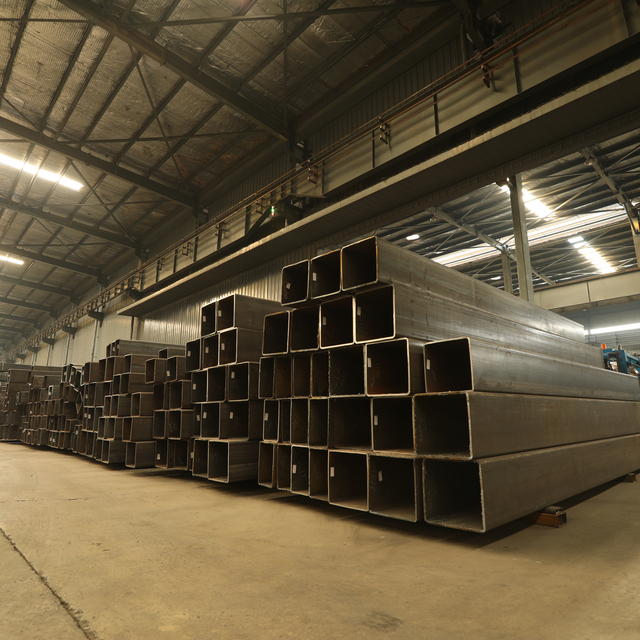
Square and rectangular tubes are essential hollow structural sections widely used in construction and engineering. Designed to provide high strength while reducing weight, they share similar manufacturing processes but differ significantly in geometry and structural behavior.
Square tubes (SHS) feature equal side lengths, offering uniform strength distribution in all directions. This symmetry makes them ideal for columns and applications requiring equal load resistance. Conversely, rectangular tubes (RHS) have unequal side lengths, allowing them to handle directional loads more efficiently. This makes RHS highly suitable for horizontal beams and supports where bending resistance in one direction is critical.
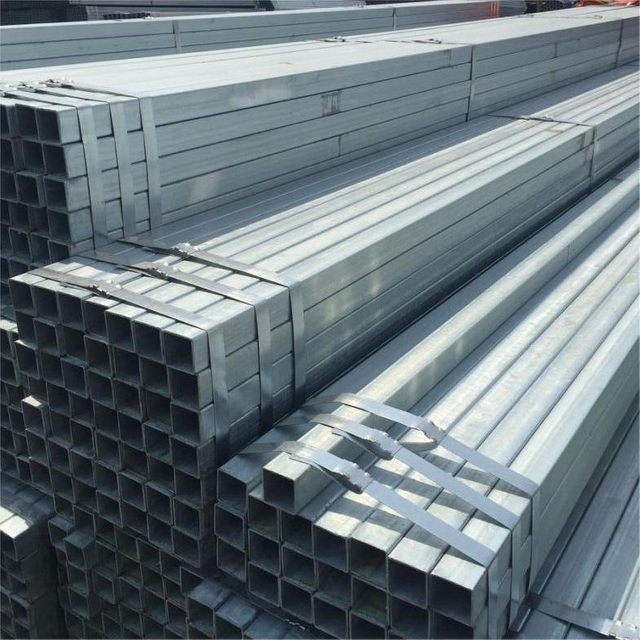
Both types are typically manufactured by cold-forming or hot-forming flat steel strips into tubular shapes and welding the longitudinal seam. They are available in carbon, galvanized, or stainless steel, and are produced to international standards like ASTM A500 and EN 10219 to ensure dimensional accuracy and mechanical reliability. Additional treatments, such as galvanizing or coating, are often applied to enhance corrosion resistance. Ultimately, the choice between square and rectangular tubes depends on specific structural needs, with square tubes offering balanced stability and rectangular tubes providing directional load efficiency.
Key Differences Between Square and Rectangular Tubes
Comparison Factor | Square Tubes (SHS) | Rectangular Tubes (RHS) |
Structural Strength | Distributes loads evenly in all directions. Ideal for vertical supports like columns and frames. | Provides greater strength along the longer dimension. Best for directional loads like beams and horizontal supports. |
Design Flexibility | Offers uniform strength and balanced structure. Perfect for symmetrical and general structural framing. | Allows engineers to align the stronger axis with the main load direction, optimizing material usage. |
Material Efficiency | May use slightly more material for directional loads. | Highly efficient for beam applications, achieving higher performance with less material. |
Aesthetics | Features a clean, balanced appearance. Commonly used for visible architectural and decorative elements. | Offers a dynamic visual profile with directional lines, frequently used in contemporary exposed structures. |
Common Applications and Best Use Scenarios
Square and rectangular tubes are versatile hollow structural sections widely used across construction, industrial, and architectural sectors. While both offer high strength and material efficiency, their distinct geometries make them ideal for different applications.
In construction, square tubes provide balanced, multi-directional strength, making them perfect for vertical columns, posts, and modular framing. Conversely, rectangular tubes excel as horizontal beams, floor supports, and roof trusses due to their superior resistance to directional bending loads.
Industrial and infrastructure projects also benefit from these distinct properties. Square tubes are commonly used for stable machine frames and bridge support columns. Rectangular tubes are preferred for conveyor systems, mechanical arms, and vehicle chassis where directional forces are predominant.
In furniture and decorative design, square tubes offer symmetry for tables and shelving, while rectangular tubes provide clean, modern lines for railings and partitions. Ultimately, selecting the correct tube type based on load direction and structural requirements ensures optimal performance, safety, and cost efficiency in any engineering or design project.
Common Mistakes When Choosing Between Square and Rectangular Tubes
When selecting between square and rectangular tubes, improper choices can lead to structural inefficiency, safety risks, and increased costs. Avoiding common mistakes is essential for successful engineering and construction projects.
First, ignoring load direction is a critical error. Square tubes offer balanced strength for multi-directional loads, while rectangular tubes excel in resisting bending along their longer axis. Using the wrong shape compromises structural efficiency.
Second, selecting an incorrect wall thickness based solely on outer dimensions can cause tubes to fail under heavy loads. Wall thickness must align with design loads and safety factors.
Third, overlooking corrosion protection in outdoor or harsh environments can drastically shorten a tube's service life. Always specify galvanized or coated tubes when necessary.
Fourth, confusing decorative-grade tubing with structural-grade tubing is a dangerous mistake. Decorative tubes often have thinner walls and lower strength, making them unsuitable for load-bearing applications.
Finally, failing to consider fabrication and welding requirements can result in weak joints and installation difficulties. Ensuring the chosen tube is compatible with your fabrication processes is vital.
By carefully evaluating load direction, wall thickness, environmental exposure, material grade, and fabrication needs, project owners can avoid these pitfalls. Proper selection ensures safer, more cost-efficient, and reliable structures with extended service life.
Conclusion
Square and rectangular tubes are essential Hollow Structural Sections (HSS) that balance strength, weight, and material efficiency in modern construction and industrial projects. While they share similar manufacturing processes, their distinct geometries dictate specific applications. Square tubes offer balanced, multi-directional strength, making them ideal for columns and symmetrical frames. In contrast, rectangular tubes provide superior resistance along one axis, excelling as horizontal beams and directional load supports.
Selecting the correct tube type is critical for structural safety, cost control, and minimizing deformation. Engineers must also consider environmental factors, wall thickness, and corrosion protection to ensure long-term durability. As global demand for standardized, high-quality HSS grows, understanding these differences is essential. Ultimately, square and rectangular tubes are not interchangeable; careful evaluation of structural requirements ensures optimal performance, lower lifecycle costs, and reliable, long-lasting engineering solutions.
FAQ;
(1) What is the main difference between square and rectangular tubes?
Square tubes have equal side lengths for balanced strength, while rectangular tubes have different dimensions for directional load-bearing applications.
(2) Which is stronger, square or rectangular tubing?
Neither is universally stronger; rectangular tubes are stronger in one direction, while square tubes offer balanced strength in all directions.
(3) Where are square tubes most commonly used?
They are commonly used in structural columns, frames, and architectural designs requiring symmetry.
(4) Can square and rectangular tubes be used interchangeably?
They can sometimes be substituted, but only after engineering evaluation of load requirements and structural design.