Tel: +86-0731-88672086 E-mail: info@great-pipe.com
- All
- Product Name
- Product Keyword
- Product Model
- Product Summary
- Product Description
- Multi Field Search

Views: 6 Author: Site Editor Publish Time: 2026-07-09 Origin: Site
Steel pipes frequently experience thermal expansion during manufacturing or high-temperature operations, leading to bending, warping, and residual stress that compromise installation and system performance. Restoring dimensional accuracy requires effective straightening techniques tailored to the pipe's material, diameter, and deformation level. Common methods include mechanical, heat, and cold straightening, which help regain straightness while preserving mechanical properties and surface quality. Post-correction inspection is equally critical to verify straightness, dimensional accuracy, and structural integrity.
Why Does Thermal Expansion Cause Steel Pipes to Bend?
Thermal expansion is a natural phenomenon where steel pipes expand when heated and contract when cooled. While uniform temperature changes typically do not alter a pipe's shape, uneven heating, improper cooling, or external forces can cause permanent bending or distortion. Understanding these root causes is essential for selecting the appropriate straightening method. Below are the primary factors contributing to thermal expansion-related bending in steel pipes:
Key Causes of Bending | Core Factors & Mechanisms |
|---|---|
Uneven Heating | During welding or heat treatment, localized high temperatures cause differential expansion. As the pipe cools, residual stress builds up, leading to permanent bending if it exceeds the steel's elastic recovery limit. |
Improper Cooling | Rapid or inconsistent cooling rates cause different sections to contract at varying speeds. This uneven contraction increases internal stress and results in warping or loss of straightness. |
Manufacturing Stresses | Processes like rolling, forming, and welding introduce internal stresses. If not properly relieved before leaving the factory, these stresses can cause the pipe to gradually bend during storage or transportation. |
Thermal Cycling | Continuous heating and cooling cycles in high-temperature environments (e.g., steam pipelines, boilers) accumulate stress over time, significantly increasing the risk of deformation. |
External Conditions | Poor installation support, excessive mechanical loads, improper lifting, or inadequate allowance for thermal expansion can physically force a high-quality pipe to bend. |
Effective Methods to Straighten Steel Pipes After Thermal Expansion
Once a steel pipe has bent due to thermal expansion or uneven cooling, selecting the appropriate straightening method is essential to restore dimensional accuracy while maintaining mechanical properties. The best approach depends on the pipe's material, diameter, wall thickness, and degree of deformation. Below are the primary methods used to correct thermal expansion-related bending in steel pipes:
Straightening Methods | Core Characteristics & Best Practices |
|---|---|
Mechanical Straightening | Uses external force via roller straightening machines or hydraulic presses to gradually return the pipe to its original shape. It is highly efficient, repeatable, and suitable for most carbon and stainless steel pipes with non-severe deformation. |
Heat Straightening | Applies controlled heat to specific areas to redistribute internal stresses as the steel expands and cools. Strict temperature control is critical to prevent altering the steel's microstructure or damaging surface coatings and requires experienced technicians. |
Cold Straightening | Corrects small to moderate bends using controlled pressure without additional heating. This method minimizes thermal damage risks and preserves original material properties, but excessive force must be avoided to prevent new residual stresses. |
Post-Straightening Inspection | Essential for verifying straightness, wall thickness, and overall dimensions. Visual checks and Non-Destructive Testing (NDT) ensure no hidden defects or surface damage exists, confirming the pipe is safe for installation. |
Recommended Steel Pipe Products and Global Shipping Solutions
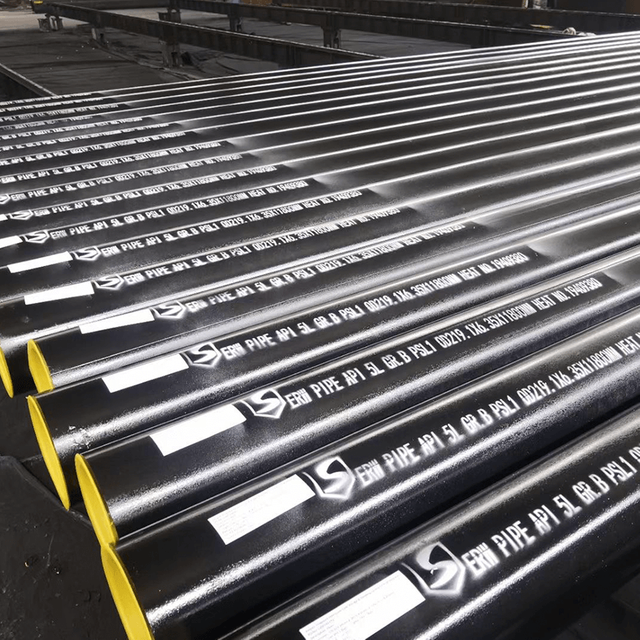
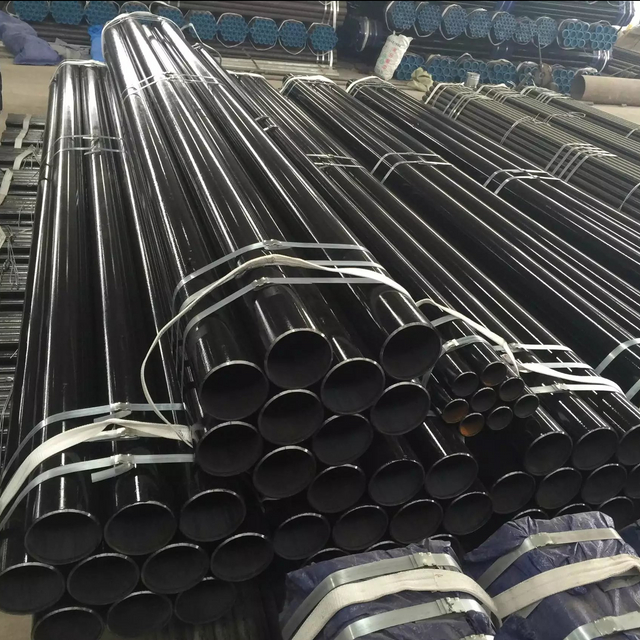
We supply premium steel pipes, including carbon, seamless, welded, stainless, and galvanized options, alongside custom solutions for diverse industrial applications. Manufactured with strict quality control and advanced equipment, our pipes offer superior dimensional accuracy and stability to effectively resist thermal expansion and mechanical stress. To support international clients, we provide professional global shipping via sea, air, and rail, featuring secure, customized packaging to prevent transit damage. Our experienced export team handles comprehensive documentation and offers real-time tracking for seamless supply chain management. Partner with us for high-quality steel pipes, competitive pricing, responsive technical support, and reliable worldwide delivery to ensure the long-term performance and efficiency of your projects.
Conclusion
Thermal expansion, uneven heating, and residual stress can cause steel pipes to bend, compromising installation accuracy and system reliability. Fortunately, proven methods like mechanical, heat, and cold straightening can effectively restore dimensional accuracy when followed by thorough quality inspection. To prevent future deformation, manufacturers should employ proper temperature control, correct welding procedures, and adequate pipe support.
Selecting high-quality steel pipes manufactured to recognized standards is equally critical for resisting thermal stress and ensuring long-term service life. A reliable supplier provides consistent quality, strict inspections, and dependable logistics to guarantee optimal performance in demanding applications.
We supply premium carbon, seamless, welded, stainless, and galvanized steel pipes, as well as customized solutions for global industrial projects. Combining strict quality control, flexible manufacturing, and reliable international shipping, we ensure your materials arrive in excellent condition and meet exact specifications. Whether for construction, oil and gas, or power generation, our experienced team is ready to help you select the most durable and efficient steel pipe solutions. Contact us today to request a quotation or discuss your specific project requirements.
FAQ:
(1) Can a thermally expanded steel pipe be completely restored to its original shape?
Answer:
Explain that slight to moderate deformation can often be corrected using professional straightening equipment, while severely damaged pipes may require replacement.
(2) What is the safest method for straightening steel pipes?
Answer:
Discuss choosing the appropriate method based on pipe material, diameter, wall thickness, and degree of deformation, emphasizing controlled mechanical or heat straightening.
(3) Does straightening affect the strength of steel pipes?
Answer:
Explain that when performed correctly according to industry standards, straightening generally does not significantly affect mechanical properties.
(4) How can thermal expansion deformation be prevented?
Answer:
Cover expansion joints, proper pipe supports, controlled welding procedures, and temperature management.