Tel: +86-0731-88672086 E-mail: info@great-pipe.com
- All
- Product Name
- Product Keyword
- Product Model
- Product Summary
- Product Description
- Multi Field Search

Views: 8 Author: Site Editor Publish Time: 2026-05-27 Origin: Site
API 5CT casing couplings are critical connectors in oil and gas drilling, designed to join casing pipes for a secure, continuous wellbore pipeline. Governed by the American Petroleum Institute's API 5CT standard, these components ensure structural stability, material compatibility, and safety under extreme pressure and corrosive conditions. Available in STC, LTC, and BTC thread types, they offer tailored sealing performance and load capacity for diverse operational needs. High-quality API 5CT couplings prevent costly failures like leaks and thread damage. Selecting the right coupling is essential for maintaining well integrity, operational efficiency, and long-term production success in modern drilling environments.
API 5CT Casing Coupling Thread Types
API 5CT casing couplings utilize distinct thread types to meet specific drilling requirements, directly impacting connection strength and sealing performance. Selecting the correct type is vital for well integrity.
STC (Short Thread Coupling) features shorter thread engagement, making it ideal for shallow wells and medium-pressure environments. While STC connections offer faster installation and lower costs, they provide comparatively lower tensile strength and sealing capability.
LTC (Long Thread Coupling) offers extended thread engagement, significantly increasing axial load capacity and leak resistance. Commonly used in deeper wells, LTC designs deliver superior durability and stability, though they require precise torque control during installation.
BTC (Buttress Thread Coupling) is engineered for high-load, high-pressure applications like deep and offshore wells. Its buttress-style geometry handles heavy axial stress effectively while maintaining reliable sealing under extreme compression and vibration.
For extreme conditions, Premium Connections provide advanced gas-tight sealing and corrosion resistance beyond standard API threads. These are essential for High-Pressure High-Temperature (HPHT) wells and sour gas environments. Understanding these differences ensures optimal selection, enhancing operational safety and reducing long-term maintenance costs.
Factors Affecting Connection Integrity of API 5CT Couplings
Key Factor | Core Impact |
Thread Manufacturing Precision | Ensures proper thread engagement and prevents leaks by strictly following API dimensional tolerances and avoiding machining defects. |
Material Quality & Heat Treatment | Enhances hardness, tensile strength, and corrosion resistance to withstand high loads and harsh downhole environments. |
Proper Make-Up Torque | Guarantees a secure seal; correct torque prevents thread damage from over-tightening or leakage from under-tightening. |
Inspection & Quality Control | Identifies defects early through dimensional checks and NDE, ensuring full compliance with API 5CT standards. |
Operating Environment | Matching coupling grades and thread types to well conditions (e.g., HPHT, deep wells) ensures long-term connection reliability. |
Common Failure Problems and Prevention Methods
Common Failure Problem | Key Causes & Prevention Methods |
Thread Galling and Wear | Caused by friction or over-torque. Prevention: Clean threads, use quality thread compound, and apply correct make-up torque. |
Leakage and Seal Failure | Results from poor engagement or defects. Prevention: Inspect threads before use, follow API torque specs, and select proper thread types. |
Corrosion Damage | Triggered by harsh fluids like H₂S or saltwater. Prevention: Use corrosion-resistant steel grades and conduct regular maintenance inspections. |
Mechanical Fatigue and Cracking | Caused by vibration and heavy loads. Prevention: Ensure sufficient tensile strength, proper alignment, and avoid exceeding load limits. |
Improper Handling and Installation | Occurs due to impacts or poor procedures. Prevention: Always use thread protectors and train personnel on standard API installation guidelines. |
Recommended API 5CT Casing Couplings & Global Shipping
We supply high-quality API 5CT casing couplings essential for safe and efficient oil and gas operations. Our comprehensive product range includes STC, LTC, and BTC thread types, available in standard API grades like J55, K55, N80, L80, and P110. For extreme conditions, we also offer premium connections designed for superior gas-tight sealing in HPHT and corrosive environments.
Manufactured under strict API 5CT specifications using advanced CNC equipment, our couplings ensure precise dimensions, high tensile strength, and reliable sealing performance. Every product undergoes rigorous inspections—including thread gauge testing and non-destructive examination—to minimize field failures.
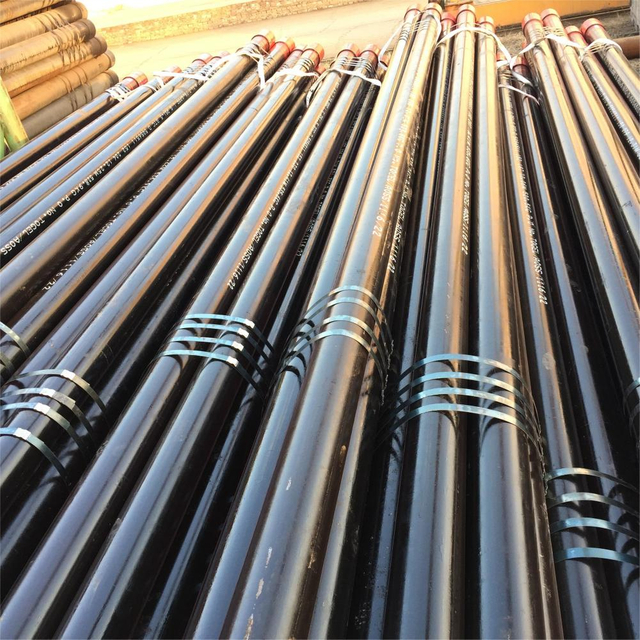
Supporting global energy projects, we provide efficient international shipping to the Middle East, Asia, Africa, Europe, and North America. Products are secured with protective thread protectors and export-standard packaging to prevent transit damage. With flexible logistics (sea, air, and multimodal), fast lead times, and full export documentation support, we deliver dependable casing solutions tailored to your project requirements.
How to Choose the Right API 5CT Casing Coupling
Selecting the right API 5CT casing coupling is vital for ensuring well safety, reliable sealing, and operational efficiency. The selection process should be guided by four key factors:
Ø Well Conditions & Thread Type: Evaluate well depth, pressure, and temperature. Standard STC couplings suit shallow, moderate-pressure wells, while LTC or BTC threads are ideal for deeper, high-load applications. For extreme HPHT or corrosive environments, premium gas-tight connections are recommended.
Ø Steel Grade Selection: Match the material grade (e.g., J55, N80, L80, P110) to the mechanical demands of the well. High-strength grades handle severe axial loads, while corrosion-resistant alloys are essential for sour gas or offshore conditions.
Ø Manufacturing Quality: Ensure the manufacturer strictly adheres to API 5CT specifications. Look for suppliers providing API certification, precise thread machining, comprehensive inspection reports (including NDE), and full material traceability.
Ø Supplier Reliability: Partner with experienced suppliers who offer stable inventory, fast lead times, global shipping support, and professional technical guidance to meet your specific project requirements.
Balancing these elements ensures optimal connection integrity and reduces long-term maintenance costs.
Conclusion
API 5CT casing couplings are essential for ensuring safety and efficiency in oil and gas drilling. Selecting the correct thread type—whether standard STC, LTC, BTC, or premium connections—is crucial for maintaining connection integrity under high pressure, heavy loads, and corrosive environments.
Preventing common failures like leakage, galling, and fatigue requires strict adherence to API manufacturing standards, proper material selection (such as J55, N80, P110), and accurate installation torque. By prioritizing high-quality products and reliable suppliers that offer rigorous inspection and global shipping support, operators can significantly reduce operational risks. Ultimately, informed product selection and proper maintenance are key to extending well life and achieving long-term production success.
FAQ
(1) What is the difference between STC, LTC, and BTC casing couplings?
Basic comparison of thread length, sealing ability, and load capacity
Typical applications for each thread type
(2) Why is connection integrity important in API 5CT casing systems?
Impact on well safety, leak prevention, and operational reliability
Risks associated with poor-quality threaded connections
(3) How can casing coupling thread damage be prevented during installation?
Proper handling, cleaning, lubrication, and torque control practices
(4) Are premium casing connections better than standard API threads?
Differences in sealing performance and application environments
Cost versus performance considerations